
Comparison
Native vs Hybrid App Development
“Native” apps are built separately for each platform in its own language. “Hybrid” and cross-platform apps share most of their code between Android and iOS. The choice affects cost, speed to market, performance and how easy the app is to maintain for years.
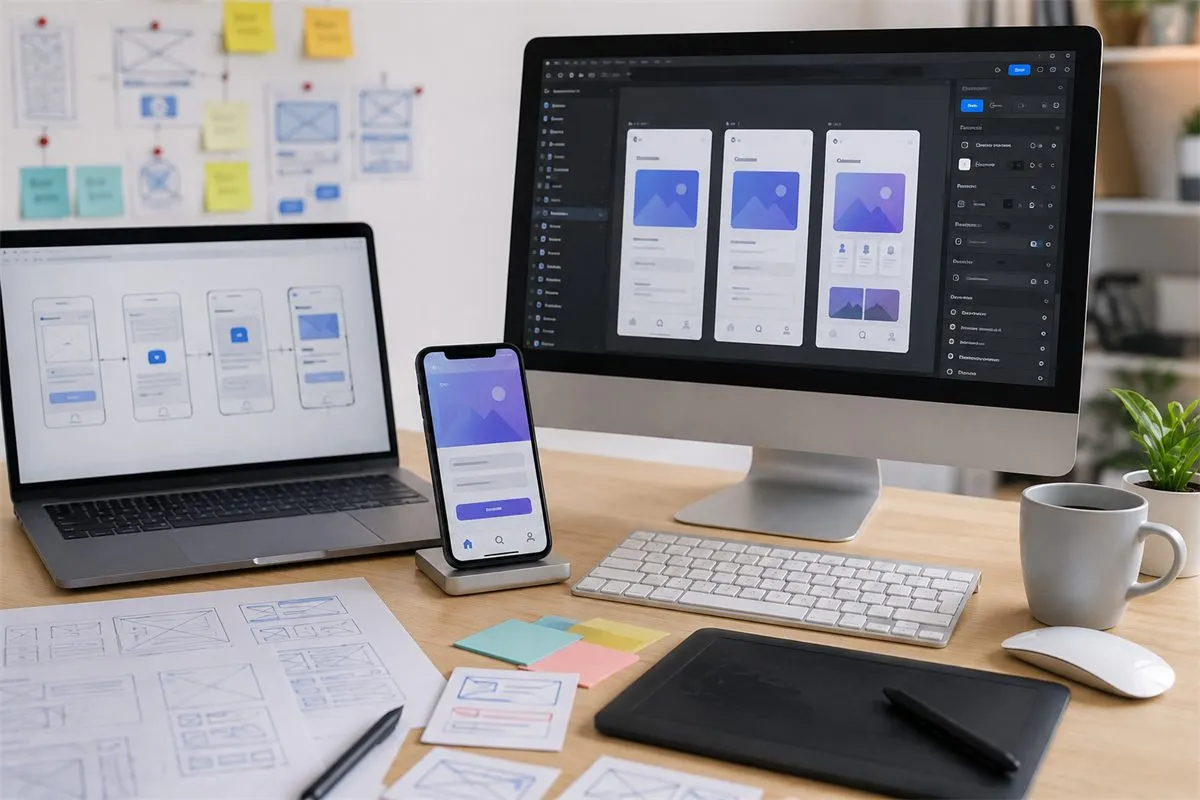
Three approaches compared
| Native | Modern cross-platform (Flutter / RN) | Classic hybrid (web view) | |
|---|---|---|---|
| Codebases | Two (Kotlin + Swift) | One shared | One (web tech) |
| Performance | Best | Very good | Weakest |
| Look & feel | Fully native | Near-native | Often feels like a website |
| Device features | Full | Most, plus native modules | Limited |
| Cost for both platforms | Highest | Lower | Lowest upfront |
| Maintenance | Two apps to update | One app | One app, but UX limits |
When native is worth it
Native development is the right call for games, AR, heavy video or audio processing, complex animations, apps that depend on new platform features as soon as they ship, and products that will only ever live on one platform. If you’re Android-only, a native Android app is a strong choice.
When cross-platform is the smarter default
For most business apps — booking, e-commerce, delivery, field sales, listings, chat, payments — modern cross-platform frameworks deliver native-quality apps from one codebase. You launch on both stores sooner and maintain one app instead of two. Old-style web-view hybrid apps are rarely the best choice today.
Comparing frameworks? Read Flutter vs React Native.
What “native” really means
A native Android app is written in Kotlin (or Java) using Google’s Android SDK; a native iOS app is written in Swift using Apple’s frameworks. Each has direct access to everything the platform offers, and each follows its platform’s design conventions naturally. The trade-off is that you are building — and later maintaining — two separate apps, often with two different developers or teams.
Why old-style hybrid apps got a bad reputation
Early hybrid frameworks displayed a website inside an app container. They were cheap to build, but scrolling felt sluggish, gestures didn’t behave like native apps, offline support was weak and many device features were awkward to use. That reputation still lingers — but modern cross-platform tools like Flutter and React Native work very differently: they produce real native apps that render with native performance.
Total cost over three years
The upfront build is only part of the cost. Over a few years, maintenance often matters more:
| Cost area | Two native apps | One cross-platform app |
|---|---|---|
| Initial build | Two apps’ worth of UI and logic | One shared codebase plus platform tweaks |
| Every new feature | Built twice, tested twice | Built once, tested on both |
| Annual OS updates | Two apps to update | One framework upgrade, checked on both |
| Bug fixes | Can differ per platform | Most fixes apply to both |
| Team | Android + iOS specialists | One cross-platform team (+ native help when needed) |
Questions to decide quickly
- Do we need both Android and iOS in the first release?
- Is any feature graphics-heavy, AR-based or game-like?
- Does the app depend on brand-new platform features on launch day?
- Who will maintain the app in two years — and how many developers can we afford?
- Is speed to market more important than the last 5% of polish?
If most answers point to speed and budget, cross-platform is usually right. Explore Flutter & React Native development, or our Android and iOS services for native builds.
FAQs
Questions, answered
Is a hybrid app the same as a cross-platform app?
Not exactly. Classic hybrid apps wrap a website in an app shell; modern cross-platform frameworks like Flutter and React Native produce real native apps from shared code.
Do users notice the difference?
For most business apps built with modern frameworks, no. For games or heavy animation, native can feel smoother.
Native app mehenga kyun hota hai?
Because you’re building and maintaining two separate apps — one for Android, one for iOS.
Related pages
Ready to build a website that grows your business?
WordPress, Shopify ya custom development — samajh nahi aa raha kya choose karein? Requirement share karo, hum suitable approach recommend karenge.